Condensation on your windows: what's normal, how to stop it, and when it's a glazing fault
Key Takeaways
- Internal condensation usually indicates high household humidity and poor ventilation.
- External condensation on modern double glazing is normal and shows the units are insulating effectively.
- Moisture trapped between the panes signals a failed seal requiring unit replacement.
- Keeping trickle vents open is one of the easiest ways to minimise internal window dampness.
- Upgrading old glazing to modern units helps keep inside panes warmer and reduces condensation.
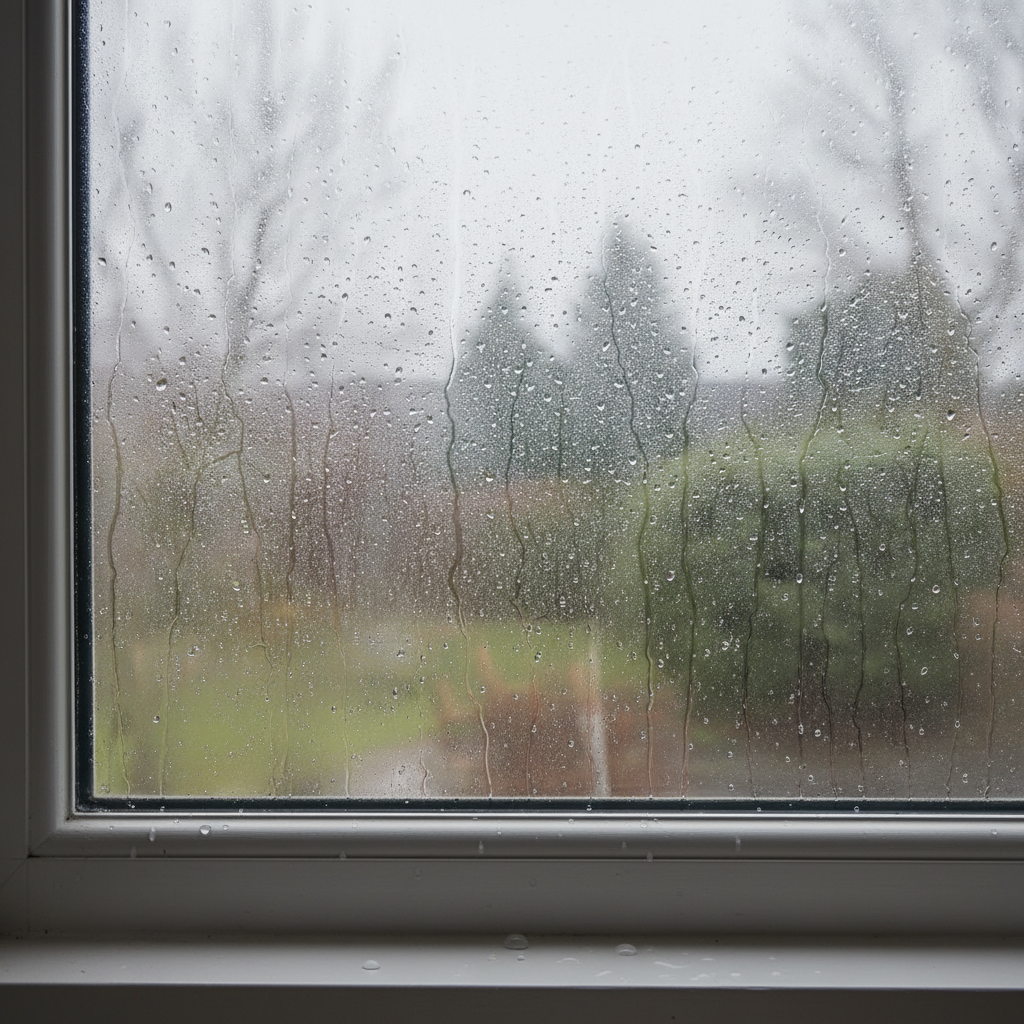
Once the heating goes on, this is one of the questions we hear most: why are my windows soaking wet every morning? Usually it's nothing to worry about. Sometimes it means a sealed unit has gone. The way to tell is to look at where the water actually is.
Why it happens
Warm air carries more moisture than cold air. When the warm, damp air in your bedroom or kitchen touches a cold window, it cools and drops that moisture as water. The glass is normally the coldest thing in the room, so it gets wet first.
You'd be surprised how much water a household puts into the air. Showers, cooking, the kettle, washing on the airer, two people breathing in a bedroom all night. In summer most of it escapes through open windows. In winter everything's shut and the heating's on, so it ends up on the glass.
That's why it's worst first thing in the morning, and why bedrooms and kitchens are usually the worst rooms.
Inside, outside or in between?
Water on the inside of the glass
This is the one most people have. It isn't harmful straight away, but if it sits there every day you'll start to see black mould on the seals, the window reveals and the bottom of the curtains. Painted sills start to flake as well.
It tells you the house needs more ventilation, or that the glass is running cold. With older units it's often both.
Mist on the outside
If you've just had new windows fitted and spot this on a frosty morning, don't panic. Modern glass keeps so much heat in that the outer pane sits at the outdoor temperature, and dew forms on it the same way it does on your car. It's usually gone by mid morning.
If anything, it shows the windows are working.
Haze between the panes
If the fog is trapped between the two sheets of glass and you can't wipe it from either side, the seal on that unit has failed. Damp air has got into the gap and the unit has lost most of its insulation. It won't clear up by itself.
Our misted double glazing guide goes through why seals fail, what a replacement unit costs, and when you're better off replacing the whole window.
How to cut condensation on the inside
The biggest culprit is closed trickle vents. Those little slotted vents along the top of the frame are meant to stay open all year round. People shut them in October because they think they're losing heat, then wonder why the bedroom windows are dripping. Open them, especially in bedrooms. The heat you lose is small next to the damp you avoid.
After that:
- Run the cooker hood while you cook, and keep the bathroom fan going for 15 to 20 minutes after a shower.
- Put lids on pans and shut the kitchen door.
- Dry washing outside when you can. If it has to be indoors, keep it in one room with the door shut and a window open a crack, or put a dehumidifier in there.
- Keep the heating low and steady rather than blasting it for an hour and letting the house go cold.
- Open the bedroom window for ten minutes when you get up.
- Pull furniture a few centimetres away from outside walls, and don't let curtains hang over radiators.
- Wipe the glass and sills in the morning so the water doesn't soak into seals and timber.
If you want a number to aim for, a cheap hygrometer from any DIY shop will show your indoor humidity. Somewhere between 40% and 60% is fine.
When the windows are the problem
Good habits only go so far if the windows are working against you. That tends to happen when:
- they're single glazed, or early double glazing with plain glass and aluminium spacer bars that get very cold round the edges
- they went in without trickle vents, so the room has almost no background ventilation
- the seals and gaskets have perished and cold air is getting in round the frame
- a sealed unit has failed, which makes the room side of the glass colder too
If your double glazing went in during the 80s or 90s, there's a fair chance at least one of those applies.
Today's A-rated units use low-E coated glass, argon gas between the panes and warm edge spacers. The inside pane stays much closer to room temperature, so far less water forms on it. New windows also come with trickle vents built into the frame.
If only one or two units have failed, you probably just need new glass in the existing frames. Our window repairs page covers what we can fix without replacing the window. If the frames are tired or draughty, have a look at new windows.
Is condensation the same as damp?
Not quite. Condensation is the most common reason for mould and damp patches in UK homes, but the water comes from inside the house. Damp patches low down on walls, or ones that show up after it rains, are a different problem (rising or penetrating damp) and need looking at separately.
Frequently asked questions
Is condensation on windows normal? A bit on the inside on cold mornings is normal, especially in bedrooms and kitchens. Puddles on the sills every day mean the house needs more ventilation.
Why do my new windows have condensation on the outside? Because they're well insulated. Heat isn't getting out through the glass, so the outer pane stays cold and dew forms on it in cold, clear weather.
Can I wipe away condensation between the panes? No. If it's between the panes, the seal has failed and the sealed unit needs replacing.
Will new double glazing stop condensation? It'll cut it right down on the glass, because modern units run warmer and have trickle vents. It won't take moisture out of the air, though, so you'll still need to ventilate.
Do you offer free inspections? Yes. If you're in Stockport, Greater Manchester or Cheshire, we'll come and have a look, tell you honestly whether it's ventilation or a failed unit, and give you a free written quote if anything needs doing. See the areas we cover or get in touch.
Not sure what's causing yours? Book a free check and we'll tell you whether it's a quick fix or time for new glass.